
Battery Storage
Home Battery Storage in Cornwall
Store the electricity your solar panels generate during the day, so it’s available when you actually need it. Standalone or paired with a new solar system, sized to your household. Solar and battery installations are also currently zero-rated for VAT, a relief that runs until 31 March 2027.
Use more of your own power
Store daytime solar generation instead of exporting it back to the grid at a lower rate.
Cut evening peak usage
Reduce how much electricity you draw from the grid during expensive evening hours.
Optional backup power
Some systems can provide backup power during a grid outage, depending on the setup.
Retrofit or new system
Works with what you already have.
If you already have solar panels installed, a battery can usually be retrofitted without needing to replace the existing array. We’ll check your current inverter and setup to confirm compatibility during the survey.
If you don’t have panels yet, we typically design solar and battery storage together as one system, sized to your household’s usage from the start rather than as an afterthought.
Sizing your system
What size battery do you need?
Home battery storage in the UK typically ranges from around 5 kWh up to 50+ kWh, but most households don’t need anywhere near the top of that range. A typical 3–4 bedroom home uses somewhere between 3,500 and 5,000 kWh of electricity a year, and evening and overnight usage, once solar generation has stopped for the day, is usually 3–7 kWh. For most Cornwall homes, that means a battery of around 8–16 kWh of usable capacity is enough to cover a typical evening and overnight, without paying for storage you’ll rarely fill.
Your actual usage pattern matters more than the average, though: a household that’s home and using appliances through the evening needs more capacity than one that’s out most days. We size every system around what your household actually uses, not a generic recommendation.
8–16 kWh
Typical usable capacity for most Cornwall homes.
3–7 kWh
Typical evening and overnight usage.
3,500–5,000 kWh
What a typical home uses across a year.
Getting more from it
Beyond just storing solar.
A battery’s main job is storing daytime solar generation for use later, but most modern batteries can also charge from the grid on a cheap overnight tariff and discharge during peak-rate hours, or export stored charge back to the grid under the Smart Export Guarantee when it’s worth more than it costs to store. Whether that’s worth setting up depends on your electricity tariff, which we’ll talk through as part of your quote.
Can I add a battery without solar panels?
Yes. A battery can be charged entirely from the grid on a cheap overnight tariff and used to cover peak-rate hours, though the payback is usually faster when it’s paired with solar generation.
How long do home batteries last?
Most lithium batteries used in UK homes are warrantied for 10 years or a set number of charge cycles, whichever comes first, and often continue working well beyond that. Exact warranty terms depend on the product and are confirmed in your quote.
Where does the battery get installed?
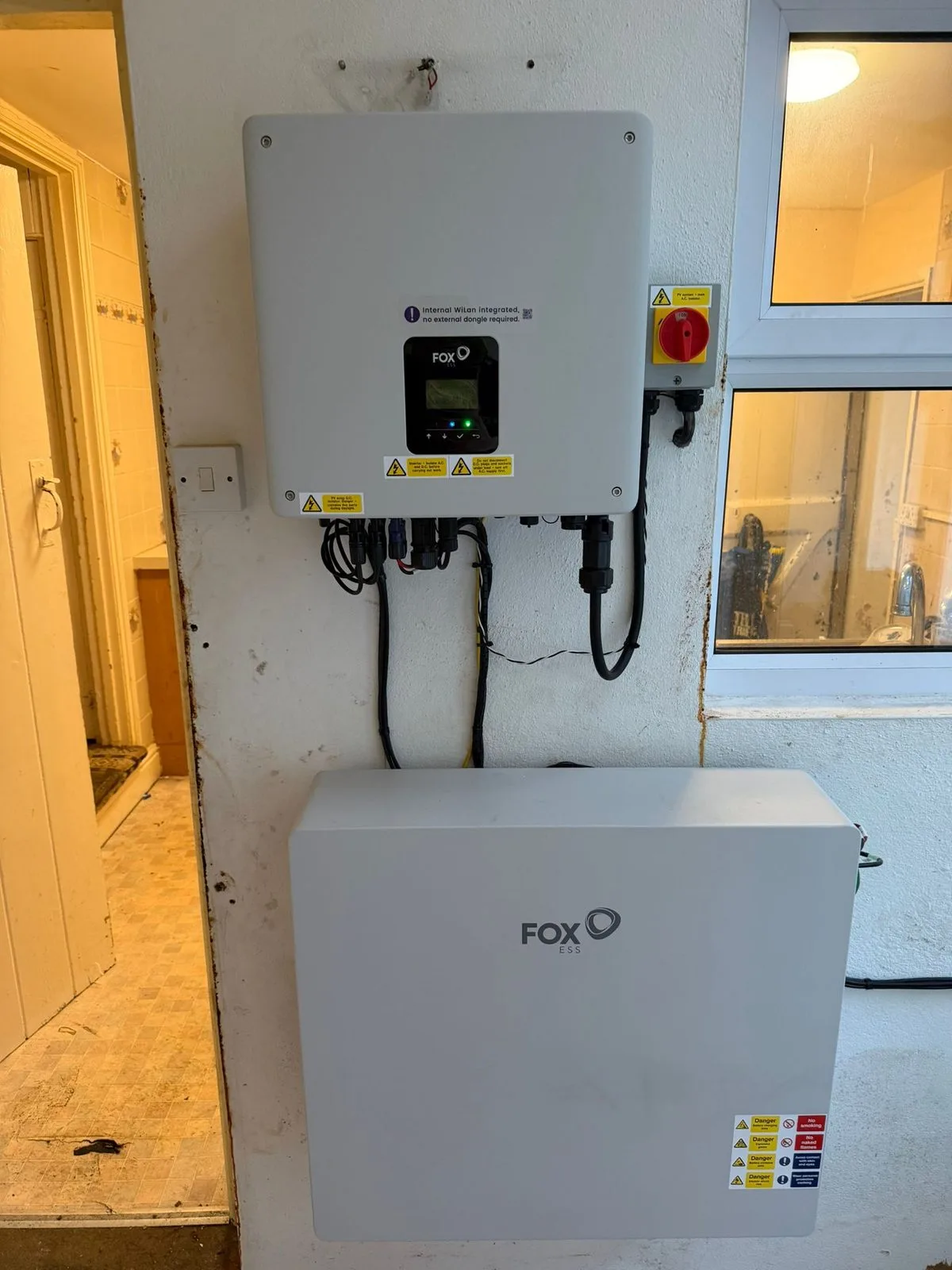
Usually in a garage, utility room or against an external wall, close to your existing consumer unit and inverter. We’ll confirm the best spot for your property during the site survey.
Often installed together
Pairs well with.
Solar Panel Installation
Solar PV systems designed for Cornwall homes, fitted by MCS-certified installers.
Learn MoreReady when you are
Get a free quote for battery storage
No-obligation quote, tailored to your home. Takes about two minutes to request.